
Corporates understand that the PMO drives all key decisions in this government.

Aggregate figures for a sample of 43 companies (excluding oil & gas PSUs as well as those in the banking, telecom and software sectors) in the BSE 100 index suggest that operating profit margins (OPMs) were down by 63 basis points (bps) year-on-year in the December quarter and that there appears to be no major causes for concern.

Over the weekend, many companies stepped in to ease the bottleneck in supply and transportation of oxygen, as demand ran high with the surge in cases.

Companies put in strict disclosure, job switch clauses in HR policies.

The database of 194 companies has shown a revenue contraction of 2.6%.

Finance Minister Nirmala Sitharaman on Tuesday unveiled a Rs 39.45 lakh crore Budget with a view to fire up the key engines of the economy to sustain a world-beating recovery from the pandemic. This was Sitharaman's fourth Budget. While the taxpayers were left in the lurch, once again, was she able to cheer Corporate India?

The post-Covid pandemic boom in corporate revenues appeared to have faded away in 2023-24. Yet, companies have reported a sharp recovery in their profits in FY24, driven by high margins. Their combined net sales, including gross interest income for lenders, rose by a modest 4.8 per cent year-on-year (Y-o-Y) in FY24.

Capital expenditure by Indian companies is likely to see an uptick in the upcoming quarters as capacity utilisation has surpassed the critical threshold of 75 per cent, and numerous companies have deleveraged their balance sheets, according to analysts. The first quarter of the current financial year has shown improved profitability, driven by a decrease in input prices. This, according to analysts at Care Ratings, should stimulate a revival in the private capex cycle.
A strong performance by sectors including banking raised the profits of Indian companies by 28 per cent in the three months ended March 2022. The rate of growth is, however, lower than the 30 per cent seen in December. Growth in net sales was also lower than what was seen in the December quarter for the sample under consideration.

RIL, Capgemini, IndiGo among companies which have offered to pay their employees' vaccination cost.

India's mergers & acquisitions (M&As) market recorded deals worth $45.44 billion in the first half of 2025, up nearly 3.3 per cent from a year ago, even as ultra large-ticket transactions remained subdued. During the first half, the 7.1 per cent rise in deal count to 1,614 signals continuing appetite among domestic conglomerates and private equity (PE) funds for mid-sized and smaller assets.
In a survey by BS reporters across India, a majority of the 25 CEOs who responded said they expected the FM to introduce amendments to the I-T Act which would reduce litigation in tax disputes between firms and the revenue authorities.
Corporate earnings grew in double digits during the April-June 2022 (Q1FY23) quarter but the momentum waned. Overall corporate earnings in the quarter were down sharply from their highs in FY22. The combined net profit of 2,981 listed companies across sectors in the Business Standard sample was up 22.4 per cent YoY to Rs 2.24 trillion in the June quarter, driven by a big jump in the earnings of banks, non-banking lenders, oil & producers, and FMCG companies. Also, earnings in the corresponding quarter a year ago were affected because of the second wave of the Covid pandemic, even though the numbers were a lot better than Q1FY21 when there was a nationwide lockdown.

Corporate earnings got a big boost from the fall in commodity and energy prices in July-September 2023 (Q2FY24) despite a slowdown in revenue growth during the quarter. The combined net profits of 3,123 firms that have declared their results so far were up 38 per cent year-on-year (Y-o-Y) to Rs 3.07 trillion in Q2FY24, up from Rs 2.24 trillion a year ago. Earnings were, however, down 3.5 per cent on a sequential basis from Rs 3.18 trillion in April-June (Q1) FY24.

Across the country, companies have stepped up their act to contain the crisis. IT and other new economy firms seem to have taken a lead.

The business confidence of India Inc for April-June quarter witnessed the steepest fall in the last three years as the Union Budget did not have any major steps towards reforms, says research firm Dun and Bradstreet.
Combined net profit of BSE500 companies at $ 63 bn is 2.3% of GDP; global average is 5%.

'This solid verdict would further strengthen his resolve to drive forward the economic agenda to ensure that the fruits of the economic momentum continue to reach the poor, so visible during the last five years.'

Indian companies are planning to increase investments in the new year to expand capacity, acquire companies, and go on a hiring spree, a survey of top executives showed. They, however, cited rising costs, weak consumer demand, and increasing interest rates as major concerns for 2023 which may impact their plans.

Business leaders, among others, ask govt to let go of fiscal target, seek stimulus, and direct cash transfer.
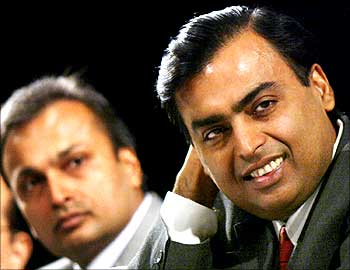
In peace and at war, firms remain tethered to promoter families in a uniquely Indian way.

Indian companies had raised $2.39 billion from foreign markets in May 2015.

No capital came in through the approval route, while the rest of $9,86,681 was by way of issuance of rupee denominated bonds.

More than 80 executives participated in the survey that was done from April to June this year.

Polling for the 288-seat Assembly is being held in a single-phase on Wednesday.

Assocham estimates offices are facing staff crunches of 15 to 25 per cent with the various strains of fever.

Yes Bank said it is set to unveil a branch to be operated exclusively by women.

The mandate will help further the development agenda in these states, with good governance and policy reforms taking centrestage

Some big ones hoard cash unduly and others borrow to keep up payments to shareholders

India's harsh lockdown has left companies grappling with temporary closure, chaotic supply chains and depressed demand. Consequently, business plans have been modified.

The investments were a mix of issuance of guarantees ($2.53 billion), loan ($257.60 million) and of equity ($232.59 million).

Majority of respondents feel that the government in the forthcoming Budget will increase the standard deduction and give more incentives for housing loans.

CEOs have complained that high interest rates have blocked their investment decisions. At the same time, customers are also deferring their purchases for new consumer durables, cars, and homes.
More than 61 per cent of women choose non-professional courses.
.jpg)
The rate cut, the industry chambers argued, could have given a positive signal to the manufacturing sector, which is undergoing difficult times.

The redevelopment of stations is good news for construction companies.

Union Minister of Commerce and Textiles Piyush Goyal has stirred up a hornet's nest by taking on India Inc, specifically the Tata group, which is among the companies that lobbied against the Modi government's pro-consumer draft e-commerce policies. While Goyal's comments, made at a Confederation of Indian Industry (CII) event, were streamed live on YouTube, the industry lobbying body later edited the video and subsequently withdrew the entire speech. Goyal had said the Tata group and other Indian companies often lobbied for their interest, while ignoring national interest.

Industry chamber Federation of Indian Chambers of Commerce and Industry said the Reserve Bank of India should intervene and cut interest rates.

India Inc raised $2.78 billion from overseas markets in October this year, up 44 per cent from a year ago, according to the Reserve Bank data released on Friday.
 © 2026 Rediff.com - Advertise with us - Disclaimer - Privacy Policy - Sitemap - Feedback - About us - Terms of use - Grievances